
Chemical Injection Pump Plungers: Tungsten Carbide, Zirconia and Other Material Options
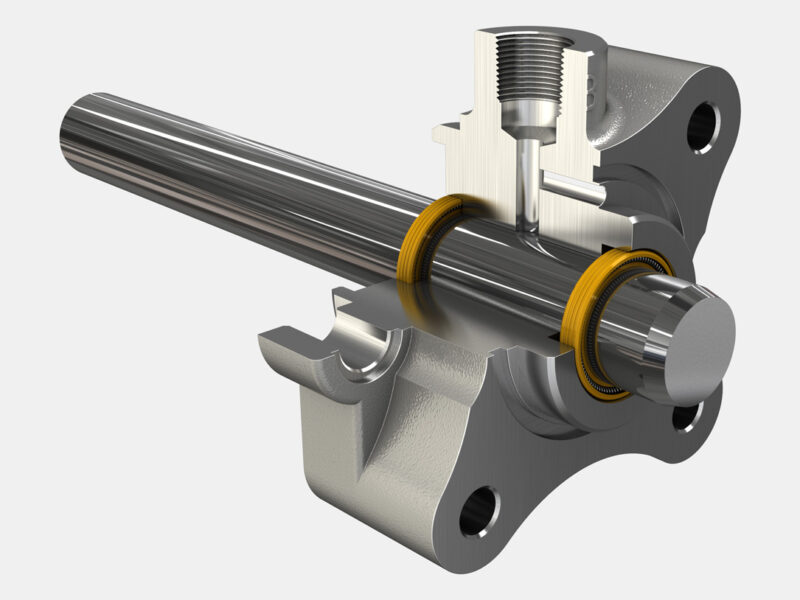
An oil and gas guide to selecting plunger materials for dependable sealing, wear resistance and chemical compatibility.
Choosing the correct chemical injection pump plunger material can significantly affect packing and/or seal-set life, leakage control, injection consistency and maintenance frequency.
This guide compares common plunger materials used in oil and gas chemical injection service and explains why MCI Solutions standardized tungsten carbide while adding solid zirconia options throughout its product lineup.
Why Plunger Material Matters in Chemical Injection Pumps
The plunger is a relatively small component, but it has an outsized influence on chemical injection pump reliability.
During operation, the plunger repeatedly travels through the pump packing and/or seal set while displacing chemical at a controlled rate and, in many applications, against substantial discharge pressure.
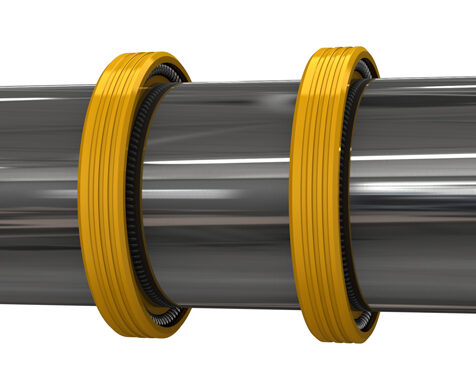
Depending on the fluid-end design, the sealing arrangement may include adjustable packing, spring-loaded seals, energized polymer seals, backup rings, guide components or a combination of these elements.
The plunger surface must remain smooth and dimensionally stable despite:
- Continuous sliding contact
- Temperature changes
- Abrasive contamination
- Corrosive chemicals
- High discharge pressure
- Extended periods of unattended operation
When a plunger becomes worn, corroded, scored or rough, the packing and/or seal set can deteriorate quickly. Leakage may increase, sealing efficiency can decline, injection accuracy may be affected and maintenance requirements can rise.
The Plunger, Packing and Seal Set Work as a System
The plunger provides the moving sealing surface, while the packing and/or seal set maintains pressure containment around the reciprocating plunger.
A high-quality seal set cannot fully compensate for a damaged or poorly finished plunger. Likewise, an advanced plunger material will not perform properly if the packing or seal material is incompatible with the injected chemical, pressure or operating temperature.
Plunger condition can directly affect:
- Packing and seal-set service life
- External chemical leakage
- Friction and drive loading
- Injection repeatability and volumetric efficiency
- Pump priming performance
- Fluid-end maintenance frequency
- Reliability at low operating speeds
For dependable performance, plunger material, surface finish, dimensional tolerance, packing or seal-set design and chemical compatibility must be evaluated together.
Common Chemical Injection Pump Plunger Materials
Stainless Steel Plungers
Stainless steel plungers are economical, mechanically durable and suitable for many general chemical-service applications.
Stainless steel is widely used in oilfield equipment because it offers useful corrosion resistance, good machinability and broad availability.
Its primary limitation is surface wear. Stainless steel is considerably softer than tungsten carbide or advanced ceramic materials. Abrasive contamination, crystallized chemical deposits and continuous sliding contact can gradually score or polish the surface.
Once damaged, the roughened area can accelerate wear of the packing and/or seal set and increase leakage.
Stainless steel can be appropriate for moderate-duty service, but it may not provide the longest maintenance interval in remote or continuously operating chemical injection applications.
Hard-Chromed Steel Plungers
A hard-chromed plunger uses a steel substrate with an electroplated chromium working surface.
Hard chrome increases surface hardness, reduces friction and can improve wear and corrosion resistance compared with untreated steel.
Performance depends heavily on plating quality, surface preparation, thickness and final grinding. The protective layer is relatively thin compared with a solid wear material.
Porosity, flaking, impact damage or localized wear can expose the underlying steel. The transition between intact chrome and a damaged area can also become harmful to the packing and/or seal set.
Hard-chromed steel can provide a practical cost-to-performance balance, but it may have a shorter useful life than a properly selected carbide or solid-ceramic plunger in demanding chemical injection service.
Ceramic-Coated Plungers
Ceramic-coated plungers typically combine a metal substrate with a ceramic-based surface intended to improve hardness, wear resistance and chemical resistance.
The coating provides the working surface while the metal core carries the mechanical load.
A properly applied and finished ceramic coating can support extended packing and seal-set life. However, coating quality is critical.
Substrate preparation, bonding, coating thickness, porosity, final grinding and surface finish all influence performance. If the coating chips, cracks or wears through, the base material can become exposed and the damaged area may harm the sealing components.
Ceramic-coated plungers can be effective, but they should not be considered equivalent to plungers manufactured from solid advanced ceramic.
Tungsten Carbide Plungers
Tungsten carbide provides exceptional hardness and wear resistance while retaining greater mechanical robustness than many traditional ceramic materials.
These properties make tungsten carbide especially well suited to high-pressure chemical injection pumps operating continuously in abrasive or demanding oilfield service.
A properly manufactured and polished tungsten carbide plunger resists scoring and helps preserve a stable interface with the packing and/or seal set.
This can be particularly valuable in pumps that:
- Operate at low speeds for long periods
- Run continuously
- Operate at high discharge pressure
- Encounter minor abrasive contamination
- Require extended maintenance intervals
Tungsten carbide grades can contain different metallic binders, and binder composition may affect compatibility with certain chemicals.
Chemical type, concentration, temperature, pressure, solids content and duty cycle must still be considered. Material selection should never be based on hardness alone.
For most oilfield chemical injection applications, tungsten carbide provides an excellent balance of:
- Wear and abrasion resistance
- Mechanical strength
- Surface stability
- Packing and seal-set compatibility
- Resistance to scoring
- Long service life
- Reliable performance in demanding field conditions
Solid Zirconia Plungers
Zirconia is an advanced engineering ceramic recognized for its combination of hardness, corrosion resistance, wear resistance and comparatively high fracture toughness.
Stabilized zirconia is tougher than many conventional technical ceramics, which makes it suitable for precision components exposed to repeated mechanical loading.
Because a solid zirconia plunger is manufactured from ceramic throughout, its performance does not depend on a thin external coating remaining intact.
There is also no metallic plunger surface exposed to the process fluid.
Potential benefits of a solid zirconia plunger include:
- Excellent resistance to many corrosive chemicals
- High wear and abrasion resistance
- Smooth, low-friction sealing surface
- No exposed metallic plunger surface
- Strong dimensional stability
- Resistance to scoring and chemical surface degradation
- Potentially extended packing and seal-set life in compatible applications
Zirconia may be particularly attractive where chemical compatibility is the dominant concern, where metallic wetted surfaces are undesirable or where the stability of a solid advanced ceramic offers a meaningful advantage.
Tungsten Carbide vs. Zirconia Plungers
Zirconia does not replace tungsten carbide in every application. Each material offers a different balance of mechanical and chemical performance.
| Selection Factor | Tungsten Carbide | Solid Zirconia |
|---|---|---|
| Typical role | MCI standard for broad oilfield service | Application-specific advanced ceramic option |
| Wear resistance | Excellent | Excellent |
| Mechanical robustness | Excellent for demanding pump service | High for an advanced ceramic, but handling and application still matter |
| Corrosion resistance | Strong, but binder compatibility should be reviewed | Excellent for many aggressive chemicals |
| Metallic process contact | Carbide includes a metallic binder | No metallic plunger surface |
| Best fit | General high-pressure, continuous-duty and abrasive service | Chemically aggressive service or applications seeking minimal metallic wetted contact |
The best plunger choice depends on the complete application, including:
- Injected chemical and concentration
- Operating and ambient temperature
- Maximum discharge pressure
- Pump speed and duty cycle
- Presence of suspended solids or contamination
- Packing and/or seal-set material
- Expected maintenance interval
- Storage and handling conditions
Why MCI Standardized on Tungsten Carbide Plungers
MCI Solutions standardized tungsten carbide plungers across its chemical injection pump lineup to provide customers with a consistently durable starting point for oilfield service.
Chemical injection equipment is often expected to operate unattended in remote and demanding conditions.
A lower-cost plunger may provide acceptable initial performance, but premature wear, packing leakage, seal-set damage or an avoidable field visit can quickly outweigh the original savings.
By making tungsten carbide standard rather than treating it as a specialty upgrade, MCI helps customers obtain a hard, stable and wear-resistant plunger surface across supported pump sizes and configurations.
This allows pump selection to focus on required pressure, displacement and injection rate without compromising the standard plunger material for typical oilfield duty.
MCI Now Offers Solid Zirconia Plungers Across the Pump Lineup
MCI now offers solid zirconia plunger options for supported pump sizes and configurations throughout its chemical injection pump lineup.
This gives operators, integrators and equipment manufacturers another high-performance material choice for applications where corrosion resistance, ceramic stability or reduced metallic process contact is especially important.
Customers can now select between:
- MCI-standard tungsten carbide for proven, broad oilfield performance
- Optional solid zirconia for applications that benefit from advanced ceramic wear and chemical resistance
Zirconia Options for MCI FMT Fluid Ends and Third-Party Drives
Solid zirconia plunger options are also available with MCI FMT fluid ends and adapter configurations designed for compatible third-party pump drives.
This allows customers to access MCI fluid-end technology, packing and seal-set configurations and advanced plunger materials without necessarily replacing an existing drive platform.
Whether the requirement is a complete MCI chemical injection pump, a replacement fluid end or an FMT adapter for another drive system, MCI can help match the plunger and sealing configuration to the chemical and operating conditions.
Selecting the Right Plunger and Seal Combination
Reliable chemical injection requires more than a drive capable of moving a plunger.
The plunger, packing and/or seal set, check valves, fluid-end materials and internal geometry must work together as a complete wetted-end system.
A smooth, dimensionally stable and chemically compatible plunger helps the sealing components maintain pressure, control leakage and perform consistently throughout their service life.
For unusual chemicals or operating conditions, users should review the full application rather than selecting a plunger based on one property alone.
Talk to MCI About Your Chemical Injection Application
MCI Solutions can help evaluate plunger material, packing and/or seal-set compatibility, fluid-end configuration, pressure requirements and drive integration for new or existing chemical injection systems.
For standard oilfield service, tungsten carbide remains MCI’s proven standard.
For applications requiring the benefits of an advanced solid ceramic, zirconia is now available across the supported MCI pump and FMT fluid-end lineup, including adapter solutions for compatible third-party drives.